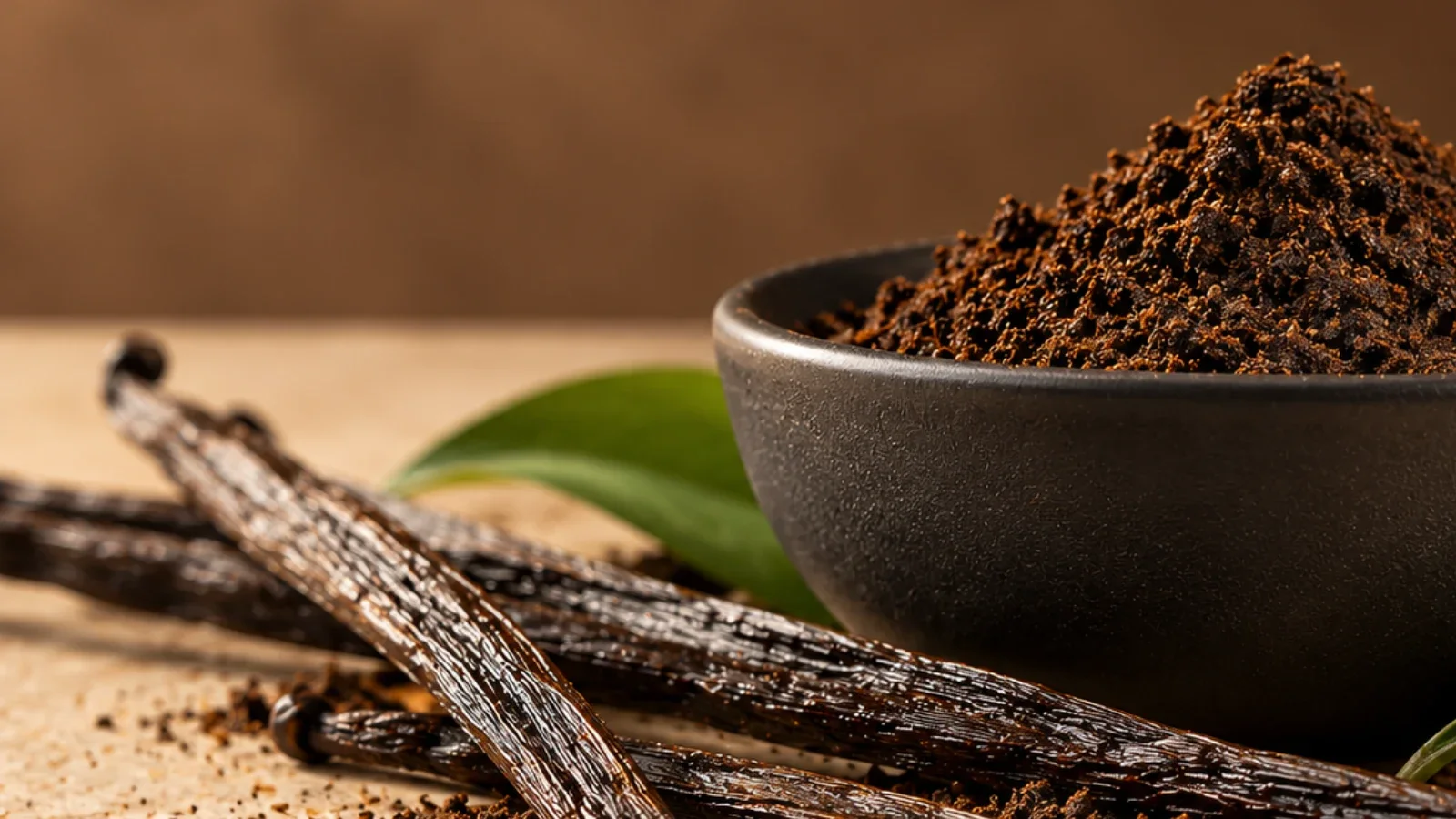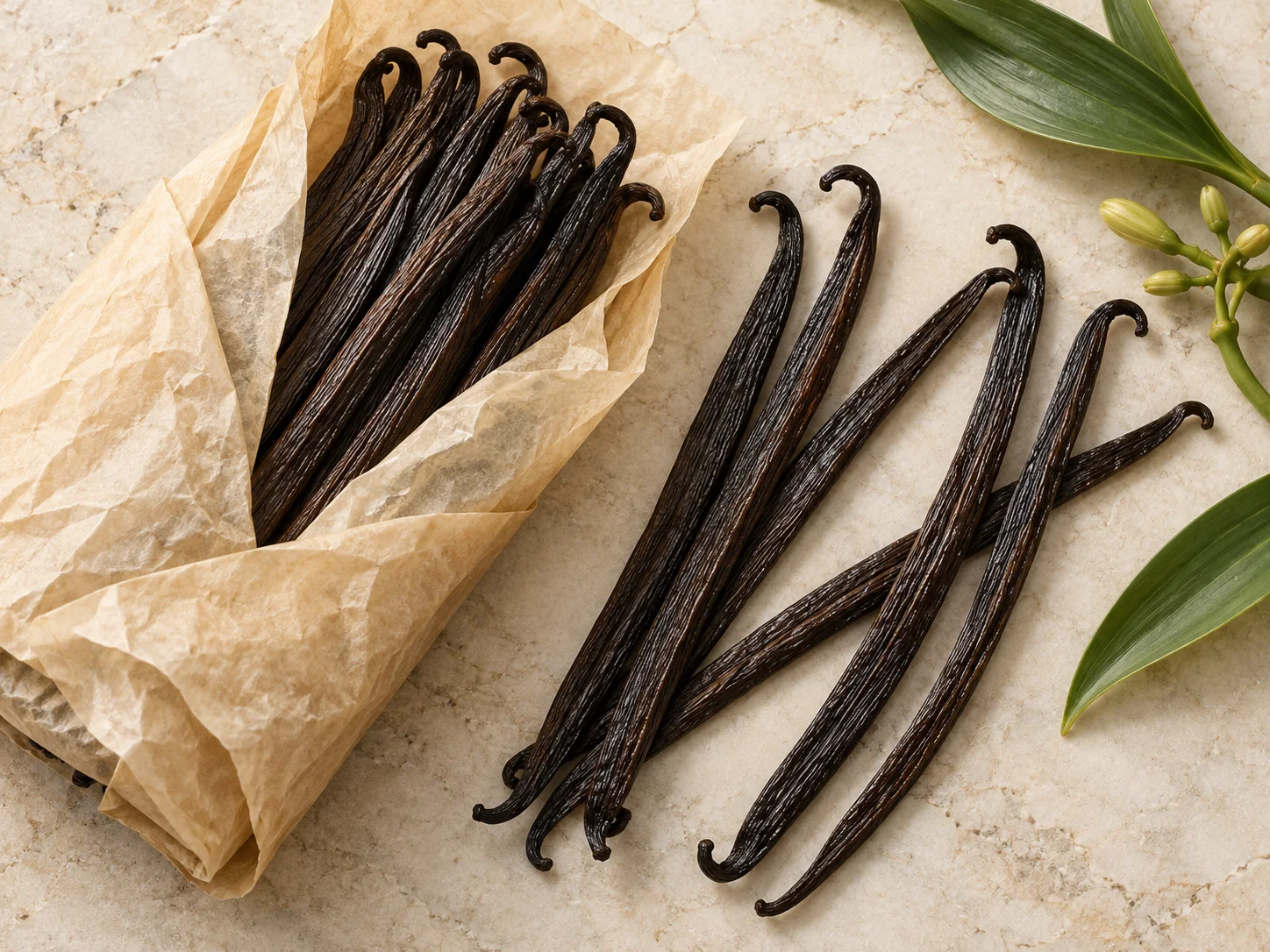
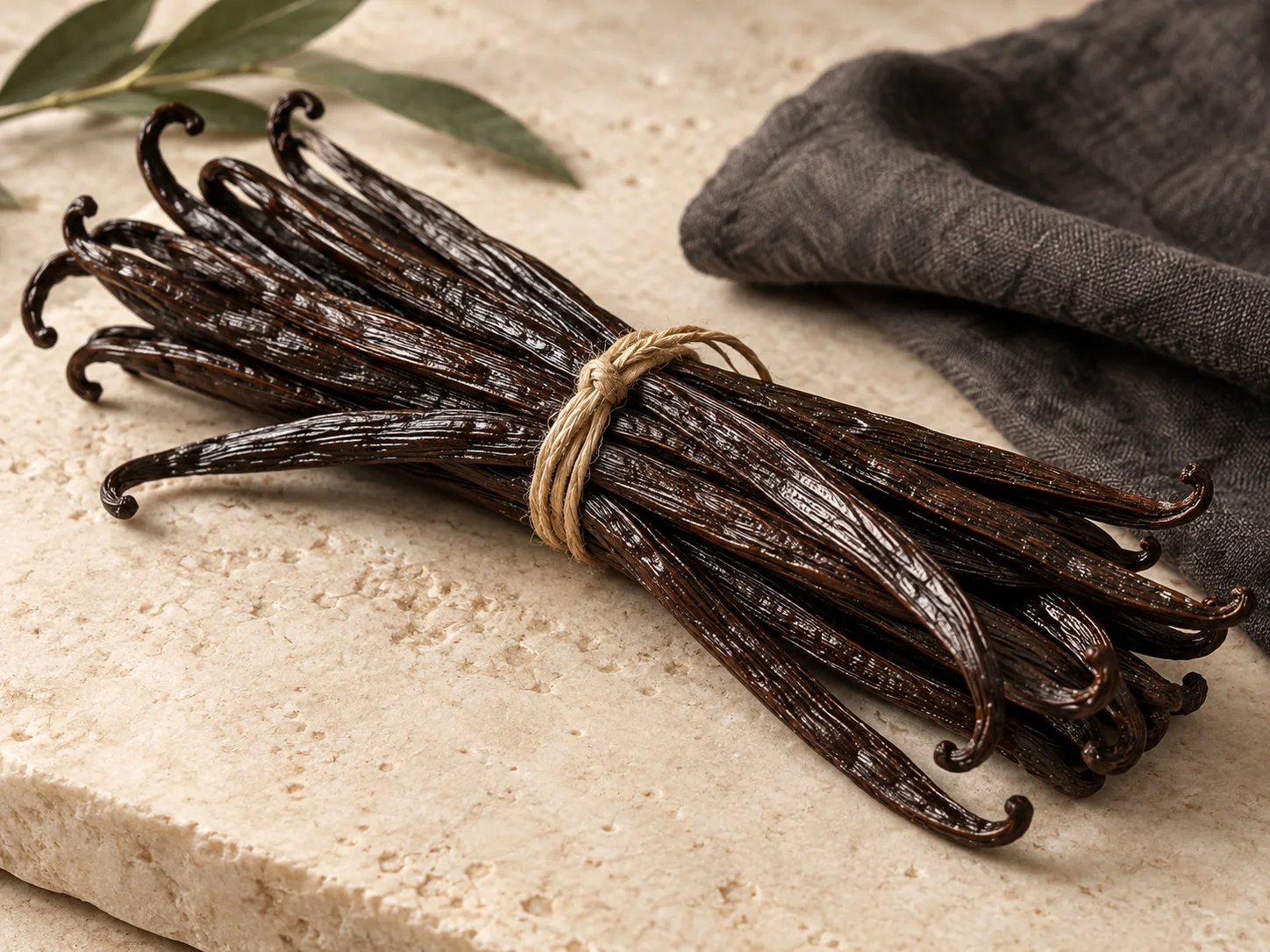
Planifolia commonly presents a stronger classic vanilla direction with woody, phenolic, or smoky dimensions. Tahitensis can show more anisic, floral, fruity, caramel, or rum-like notes, although origin and processing still influence the result.
For bakery, dairy, beverages, fragrance, or extraction, describe the final product, base ingredients, dosage approach, and target aroma. Evaluate a representative sample in the actual formulation before making a commercial decision.
Research sourceJournal of the Science of Food and Agriculture via PubMed ↗External research is provided for buyer education. Product and batch details must still be confirmed for the actual order.